Case Study
Komatsu ANZ Transforms Legacy ERP Complexity into a Future-Ready Annata 365 Platform
Annata AX 2012 to Annata 365 Data Transformation | Enterprise ERP Modernization
Moving Beyond ERP Migration to Business Transformation
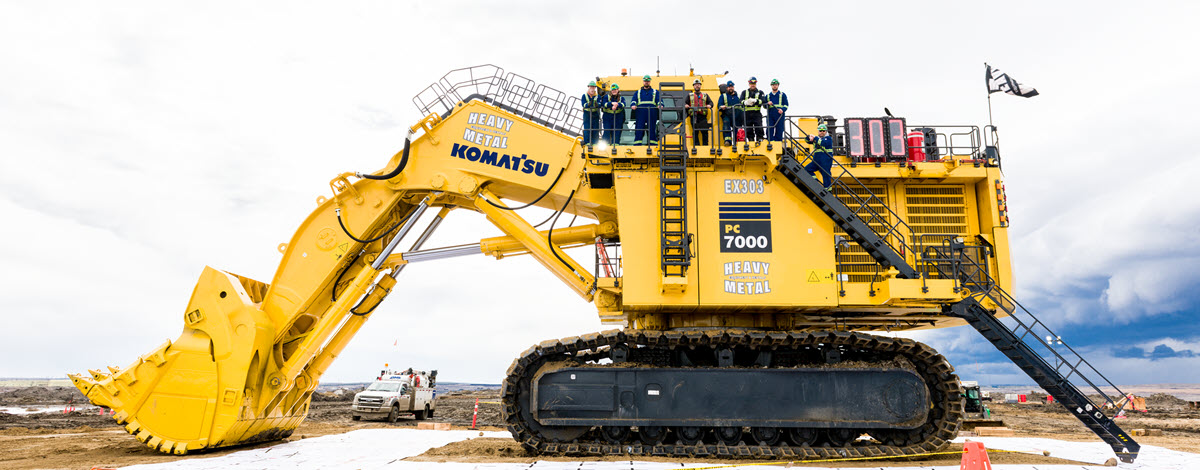
Komatsu Australia & New Zealand is one of the region's leading suppliers of construction, mining, forestry, and industrial equipment. Supporting thousands of customers across a wide operational network, Komatsu manages complex equipment sales, rental operations, parts distribution, service delivery, supply chain activities, and financial processes.
Over years of growth, its ERP environment had evolved into a highly customized Annata AX 2012 platform deeply integrated with SAP, warehouse management systems, OEM applications, and multiple operational systems.
When Komatsu embarked on its journey to Annata 365, the objective was not simply to upgrade its ERP platform. The goal was to simplify complexity, modernize business processes, and adopt standard platform capabilities wherever possible.
This required a transformation approach that went beyond moving data — it required redesigning how years of ERP complexity would transition into a modern cloud environment.
The Challenge
Transforming Years of Customization into a Modern ERP Foundation
Komatsu's legacy ERP environment contained extensive customizations, complex data structures, and deeply connected business processes.
The challenge was not just extracting and loading data. It was transforming decades of operational history into a cleaner, standardized Annata 365 model.
Key challenges included:
Hundreds of customized ERP processes requiring review and redesign
Large-scale data transformation from legacy structures to Annata 365 standards
Configuration rationalization and optimization
Complex warehouse restructuring
Financial dimension redesign
Migration of 200+ master and transactional data entities
High-volume historical transactions across supply chain, manufacturing, projects, and finance
Integration dependencies across SAP, OEM systems, warehouse platforms, and operational applications
Rather than migrating legacy complexity forward, Komatsu adopted a standard-first modernization approach, retaining only customizations that delivered genuine business value.
The Objective
Komatsu required a migration partner capable of delivering enterprise-scale data transformation — not just technical data movement.
The program objectives were to:
Simplify legacy ERP complexity
Standardize processes on Annata 365
Improve data quality and consistency
Transform historical and operational data into the future-state business model
Redesign critical configurations
Enable a controlled, low-risk transition to production
The Solution
A Structured Enterprise Migration Approach
LGSTech delivered the transformation using its proven migration methodology, combining automation, migration accelerators, and deep Dynamics and Annata expertise.
The program focused on four key workstreams.
Configuration Transformation
More than 700 ERP configuration components were analyzed, cleansed, transformed, and migrated.
Instead of performing a direct lift-and-shift migration, each configuration element was reviewed against the future-state Annata 365 architecture.
This enabled Komatsu to:
- Remove unnecessary legacy complexity
- Standardize ERP configurations
- Reduce technical debt
- Establish a cleaner foundation for future operations
Warehouse Rationalization
One of the most complex transformation areas was warehouse restructuring.
The legacy system contained approximately 200 warehouse records, including obsolete, duplicate, and temporary locations accumulated over years of operation.
LGSTech redesigned the warehouse model by:
- Consolidating duplicate warehouses
- Removing invalid locations
- Creating streamlined warehouse hierarchies
- Automatically remapping dependent business records
The result was a simplified operational structure with approximately 50–60 active warehouses.
Because warehouse references existed across inventory, purchasing, logistics, production, and sales processes, the transformation required advanced dependency mapping across interconnected ERP objects.
Financial Structure Transformation
Komatsu redesigned its financial dimension framework as part of the Annata 365 modernization.
LGSTech transformed legacy financial structures into the new model through automated mapping and validation rules.
This ensured:
- Historical financial information remained intact
- Reporting structures aligned with the future operating model
- Downstream processes continued without disruption
Enterprise Data Migration
Following configuration transformation, LGSTech migrated more than 200 master and transactional entities, including:
- Customers and vendors
- Products and inventory
- Sales and purchase orders
- Quotations
- Production records
- Projects
- Supply chain transactions
- Manufacturing data
- Financial transactions
Each entity underwent structured transformation, validation, and dependency management to ensure accuracy and consistency within Annata 365.
Delivery Approach
Agile, Multi-Cycle Migration Execution
The program was delivered through 12 Agile delivery sprints, enabling incremental validation, continuous feedback, and improved production readiness.
By Sprint 10, the migration program was progressing successfully toward:
User Acceptance Testing (UAT)Mock go-live activitiesProduction readiness

Outcomes & Benefits
The engagement enabled Komatsu to transition from a highly customized legacy ERP environment into a cleaner, scalable Annata 365 foundation.
Key outcomes included:
Simplified ERP Foundation
Legacy complexity was transformed into a standardized Annata 365 architecture aligned with modern platform capabilities.
Improved Data Quality
Configuration, warehouse, financial, and operational data were cleansed, transformed, and validated before migration.
Reduced Technical Debt
Unnecessary legacy structures and customizations were removed instead of being carried forward.
Automated Data Transformation
Complex dependencies across hundreds of ERP objects were managed through structured transformation workflows.
Greater Go-Live Confidence
Repeatable migration cycles improved testing readiness and reduced production migration risk.
Future-Ready Operations
Komatsu established a scalable ERP foundation designed for easier upgrades, improved maintainability, and long-term growth.
Why LGSTech
Enterprise ERP migrations rarely fail because data cannot be moved. They fail because organizations underestimate the complexity of transforming years of business processes, customizations, and historical data into a modern ERP model.
LGSTech combines:
Proven ERP migration methodologiesAutomation-driven executionDeep Microsoft Dynamics and Annata expertiseEnterprise-scale transformation capabilityStructured validation and reconciliation frameworks
For organizations modernizing Microsoft Dynamics, Annata, and other enterprise ERP platforms, LGSTech delivers more than migration — we transform legacy ERP complexity into business-ready digital foundations.